Complete Guide to Under-Counter Drawer Refrigerators & Freezers: Why Modern Kitchens Love Them – Design, Installation & OEM Customization Insights
- Share
- Issue Time
- Sep 16,2026
Summary
Under-counter drawer refrigerators offer seamless kitchen integration, ergonomic access, and flexible dual-zone storage. Ideal for modern homes and outdoor kitchens, with strong OEM customization potential.
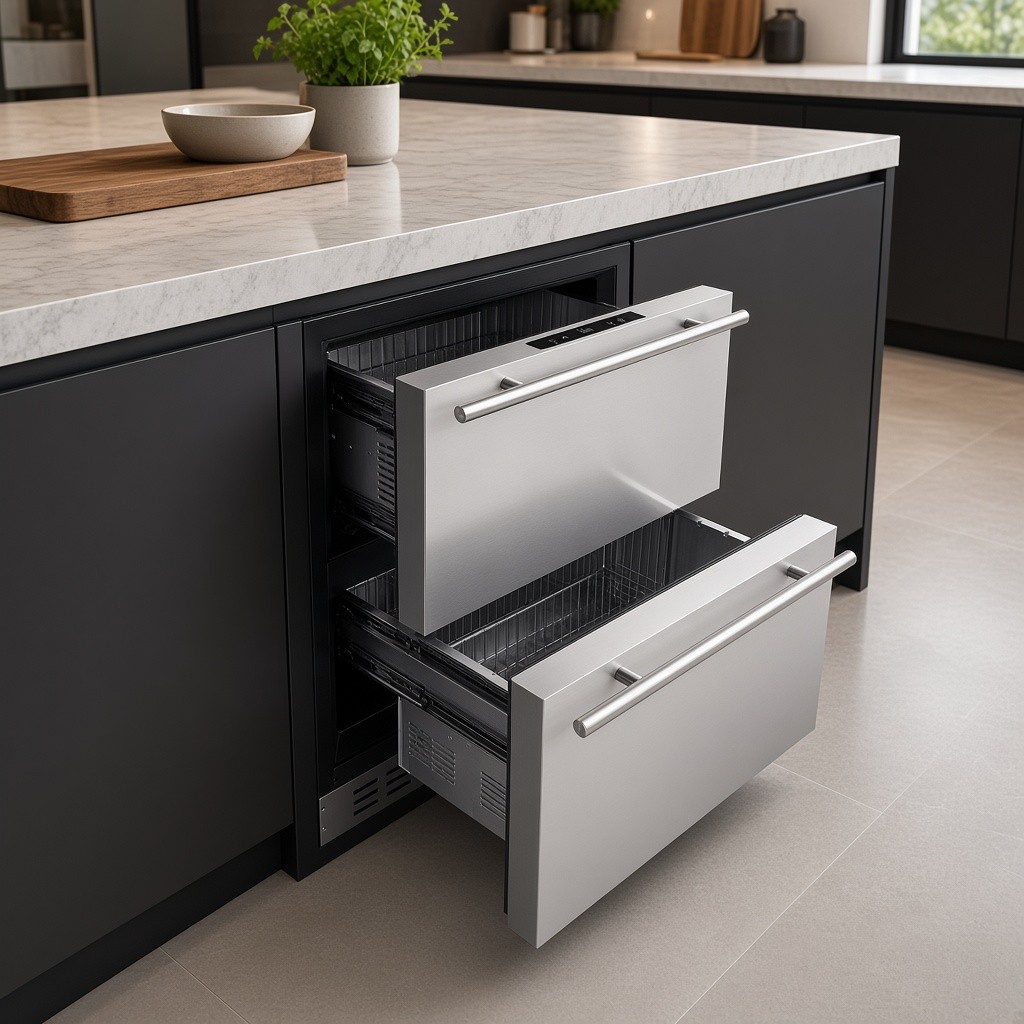
In today’s kitchen design landscape, aesthetics, functionality, and space efficiency are no longer optional—they are essential. Homeowners, interior designers, and appliance brands are increasingly moving away from traditional upright refrigerators toward more integrated, furniture-like solutions. One category that has seen rapid growth is the under-counter drawer refrigerator and freezer.
These appliances combine the convenience of pull-out drawers with precise temperature control, seamless cabinetry integration, and flexible storage. For brands looking to expand their built-in refrigeration portfolio, drawer units represent a high-value opportunity in both residential and light commercial markets.
This guide explores why under-counter drawer refrigerators are gaining popularity, key design principles, installation best practices, and how professional OEM/ODM manufacturers can support customized solutions for global brands.
Why Modern Kitchens Prefer Under-Counter Drawer Refrigerators
Several converging trends explain the rising demand for drawer-style refrigeration:
1. Seamless Integration with Cabinetry
Traditional freestanding or even standard built-in refrigerators often create visual breaks in kitchen design. Drawer refrigerators sit flush under the countertop and can accept custom panels that match surrounding cabinetry. The result is a clean, continuous look that aligns with current “furniture-grade” kitchen aesthetics.
2. Ergonomic Accessibility
Pull-out drawers bring food and beverages forward at a comfortable height, reducing the need to bend or reach into deep compartments. This is especially valued in open-plan kitchens, aging-in-place designs, and commercial prep areas where speed and comfort matter.
3. Flexible Zoning and Organization
Many drawer models offer independent temperature control in upper and lower drawers. One drawer can be set for fresh produce or beverages while the other functions as a freezer or chill zone. This modularity supports modern lifestyles that mix everyday storage with specialized needs (wine, craft beer, meal prep, or outdoor entertaining).
4. Space Efficiency in Compact Layouts
In urban apartments, luxury condos, and outdoor kitchens, every centimeter counts. Under-counter drawers utilize previously underused space beneath islands, bars, or perimeter counters without requiring tall vertical clearance.
5. Growing Demand in Outdoor and Secondary Kitchens
Outdoor kitchens and entertainment zones increasingly specify weather-resistant drawer refrigerators and freezers. These units support beverage service, outdoor dining, and multi-zone living without compromising indoor kitchen design.
Market data and buyer feedback consistently show strong interest in 15-inch, 18-inch, 24-inch, and 30-inch wide drawer configurations, particularly in North America and Europe.
Key Design Considerations for High-Performance Drawer Refrigerators
Successful drawer refrigeration products balance form and function. Leading designs typically incorporate the following elements:
Cabinet Construction and Insulation
High-density foam insulation and robust steel or aluminum construction help maintain temperature stability while minimizing energy use. For outdoor models, corrosion-resistant materials and weather-sealed components are essential.
Drawer Mechanism and Soft-Close Systems
Full-extension slides with soft-close technology improve user experience and durability. Heavy-duty glides rated for frequent use are preferred in both residential and light commercial applications.
Temperature Precision and Airflow
Compressor-based systems with digital controls deliver reliable cooling. Dual-zone models allow independent temperature settings (for example, 2–8°C in one drawer and –18°C in the other). Even airflow distribution prevents hot spots and frost buildup in frost-free designs.
Door and Panel Options
- · Stainless steel
- · Black glass or full black finishes
- · Panel-ready (accepts custom cabinetry panels)
- · Handle options ranging from integrated to pro-style
- Panel-ready versions are especially popular among designers seeking complete visual integration.
Interior Organization
Adjustable or removable bins, glass or stainless shelves, LED lighting, and humidity control features enhance usability. Clear visibility and easy cleaning are priorities for end users.
Noise and Energy Performance
Quiet operation (typically under 42 dB) and efficient compressors are critical for open-plan living spaces. Compliance with regional energy standards (Energy Star, EU energy labels, etc.) strengthens market acceptance.
Installation Best Practices
Proper installation is crucial for performance, longevity, and warranty validity. Key points include:
Ventilation Requirements
Most under-counter drawer units require adequate airflow around the compressor and condenser. Manufacturers typically specify minimum clearances at the rear, sides, and sometimes underneath. Restricted ventilation can lead to higher energy consumption, reduced cooling capacity, or premature component failure.
Cabinet Dimensions and Leveling
Precise cut-out dimensions and a level installation surface ensure smooth drawer operation and proper door alignment. Anti-tip brackets or securing methods may be required depending on the model and local codes.
Electrical and Drainage Considerations
Dedicated circuits and correct voltage are standard. Some models include automatic defrost drainage that must be routed appropriately, especially in outdoor or island installations.
Panel Attachment (for Panel-Ready Units)
Custom panels must meet specified weight and thickness limits. Incorrect panel mounting can affect door seal integrity and drawer alignment.
Professional vs. DIY Installation
While some units are designed for straightforward installation, complex panel-ready or outdoor applications often benefit from professional installers familiar with built-in refrigeration.
OEM partners should provide clear technical drawings, installation manuals, and support documentation to reduce field issues and support brand reputation.
OEM/ODM Customization Opportunities
For appliance brands, retailers, and private-label companies, drawer refrigerators offer strong differentiation potential through customization. A capable manufacturer can support:
Dimensional Flexibility
Custom widths, depths, and heights to fit specific cabinetry standards or regional preferences (e.g., metric vs. imperial sizing).
Aesthetic Customization
- · Finish options (stainless, black stainless, black glass, custom colors)
- · Handle styles and placement
- · Logo application and branding elements
- · Panel-ready configurations with precise mounting hardware
Functional Upgrades
- · Single-zone or dual-zone temperature control
- · Smart features (Wi-Fi connectivity, app control, door-open alarms)
- · Specialized interiors (wine racks, beverage organizers, freezer baskets)
- · Outdoor-rated packages with enhanced weather protection
Certification and Market Adaptation
Support for CE, CB, ETL, SAA, NSF, and other required certifications. Voltage, plug type, and energy-label compliance can be tailored to target markets in North America, Europe, Australia, and beyond.
Production Scalability
Reliable manufacturers maintain consistent quality from prototype through mass production, with clear communication on MOQ, lead times, and packaging designed for international shipping.
Working with an experienced OEM/ODM partner allows brands to launch differentiated products without investing in full in-house R&D and tooling.
Conclusion: A Strategic Category for Modern Refrigeration Portfolios
Under-counter drawer refrigerators and freezers address core needs of contemporary kitchen design: seamless integration, ergonomic access, flexible storage, and space efficiency. Their appeal spans residential luxury kitchens, outdoor entertainment areas, and commercial applications.
For brands seeking to expand their built-in refrigeration offerings, drawer units represent a high-potential category with strong OEM/ODM customization possibilities.
Success depends on thoughtful design, reliable performance, clear installation guidance, and the ability to adapt products to different markets and aesthetic preferences.
As kitchen design continues to prioritize integration and user experience, demand for well-engineered drawer refrigeration solutions is expected to grow. Manufacturers that combine technical capability with flexible customization will be well positioned to support global partners in this evolving segment.