How to Choose a Wine Cooler Manufacturer in China: A B2B Buyer's Checklist
- Share
- Issue Time
- Sep 24,2026
Summary
Learn how to choose a reliable wine cooler manufacturer in China. This B2B checklist covers quality, OEM/ODM, MOQ, certification, customization, and manufacturing capabilities.
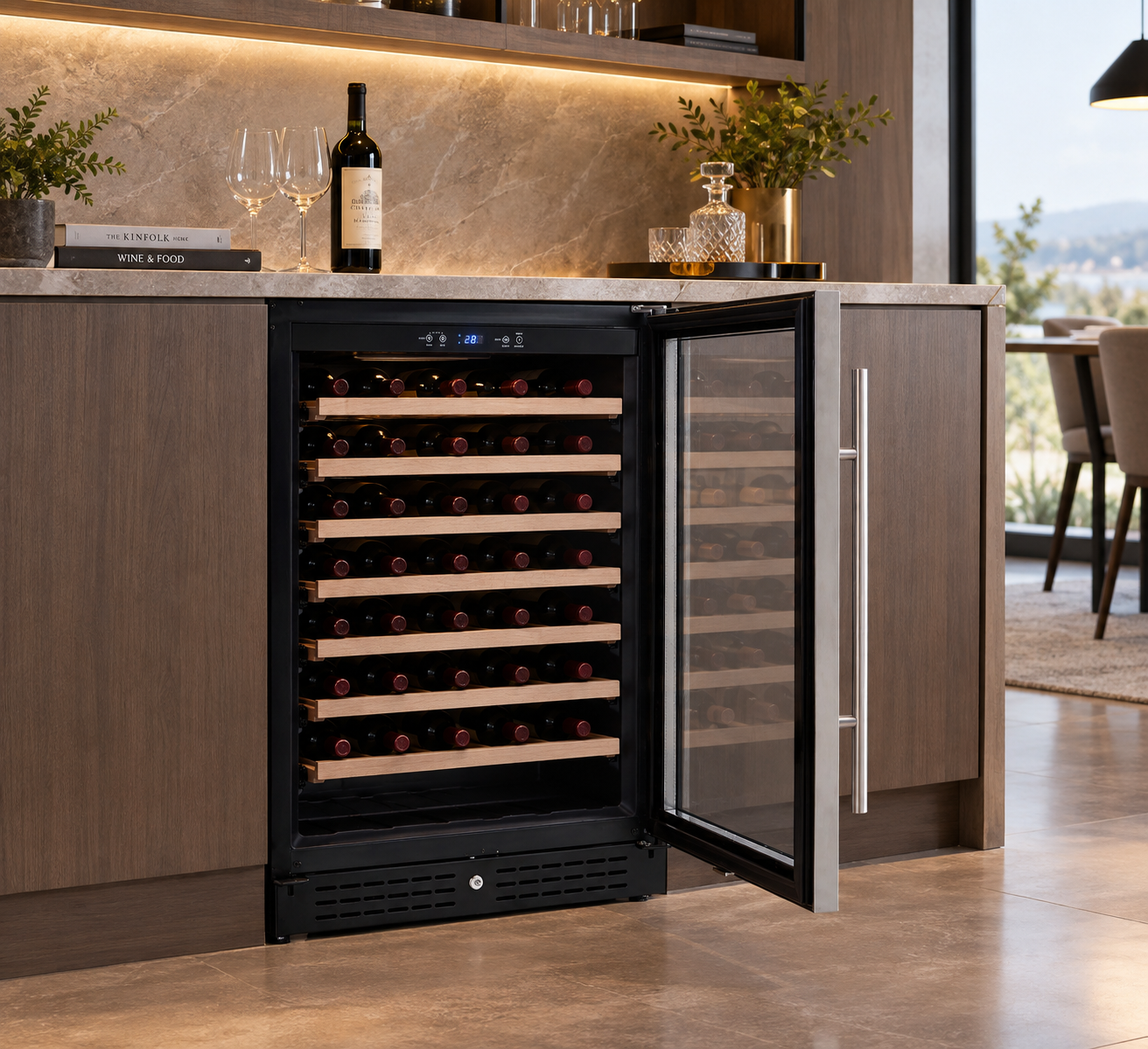
Finding the right wine cooler manufacturer in China is not simply about comparing factory prices. For importers, distributors, retailers, private-label brands, and appliance companies, the right manufacturing partner can affect product quality, certification, lead times, customization, and long-term business growth.
China has a large and diverse refrigeration manufacturing industry, but not every factory has the same capabilities. Some specialize in standard residential appliances, while others focus on commercial refrigeration or custom OEM/ODM projects.
If you are sourcing wine coolers from China, this B2B checklist can help you evaluate manufacturers more systematically and choose a supplier that matches your product requirements and target market.
1. Check Whether the Manufacturer Actually Specializes in Wine Coolers
The first question to ask is simple:
Is wine cooling a core product category for the manufacturer, or just one product among hundreds?
A factory with specific experience in wine coolers is more likely to understand important product details such as:
- · Wine bottle capacity and shelf spacing
- · Single-zone and dual-zone temperature control
- · Compressor cooling systems
- · Built-in and freestanding installation
- · Front ventilation requirements
- · Wood, wire, or glass shelving
- · Glass door construction
- · Noise and vibration control
- · Temperature stability
- · Different cabinet sizes and configurations
For B2B buyers, specialization can make product development and communication much more efficient.
At Foshan Shunde Wiki Electrical Co., Ltd., wine coolers are one of the company's core manufacturing categories. WikiCooler develops and manufactures wine coolers for overseas markets, while also offering related refrigeration products such as beverage coolers, refrigerators, drawer refrigerators, and freezers.
With more than a decade of manufacturing experience, the company works with international customers looking for standard products as well as OEM/ODM and private-label solutions.
2. Evaluate the Factory's Manufacturing Experience
A supplier's years of experience alone do not guarantee quality, but manufacturing experience can be an important indicator when combined with actual production capabilities.
Instead of asking only:
"How many years have you been in business?"
B2B buyers should ask:
- · How long have you been manufacturing wine coolers?
- · Which wine cooler models are currently in production?
- · Which markets do you supply?
- · Do you manufacture the products in-house?
- · What production and testing processes do you have?
- · Can you provide factory and product information?
- · How do you handle product improvements and quality issues?
A manufacturer that has been producing refrigeration appliances for many years is generally better positioned to understand the practical challenges involved in product development, assembly, testing, packaging, and international shipment.
For WikiCooler, manufacturing experience is combined with a product portfolio centered on refrigeration appliances, with wine coolers representing an important part of the company's current business.
3. Look Beyond the Factory Price
Price is obviously important in B2B sourcing, but the lowest quotation is not necessarily the lowest total cost.
A wine cooler quotation can be affected by many factors, including:
- · Cabinet dimensions
- · Compressor and cooling system
- · Glass door construction
- · Shelving materials
- · Temperature control system
- · Interior lighting
- · Door and handle design
- · Finishing materials
- · Packaging requirements
- · Certification requirements
- · Order quantity
- · Customization
- · Shipping specifications
Two wine coolers that look similar in product photos can have significantly different manufacturing costs because their internal components, insulation, cooling systems, electrical components, or testing standards may be different.
For this reason, buyers should compare complete product specifications, rather than comparing unit prices alone.
4. Check OEM, ODM, and Private-Label Capabilities
If you are building your own wine cooler brand, OEM/ODM capability can be more important than simply finding a low-cost supplier.
Ask the manufacturer what can actually be customized.
For example:
Branding
- · Customer logo
- · Product name
- · Rating label
- · User manual
- · Packaging
Exterior Design
- · Door finish
- · Glass door
- · Handle
- · Door hinge configuration
- · Ventilation grille
- · Cabinet finish
Interior Configuration
- · Wood shelves
- · Wire shelves
- · Glass shelves
- · Shelf spacing
- · Bottle capacity
- · Interior layout
Product Configuration
- · Single-zone or dual-zone
- · Temperature range
- · Control panel
- · Lighting
- · Compressor configuration
- · Cabinet dimensions
Not every manufacturer can support every type of customization.
For many B2B projects, starting with an existing proven platform and making controlled modifications can be more efficient than developing a completely new product from zero.
This is one area where an experienced manufacturer can help buyers balance product differentiation, development cost, MOQ, and time to market.
5. Ask About Minimum Order Quantity (MOQ)
MOQ is one of the most important questions for importers and new brands.
However, MOQ should not be considered as one fixed number for every project.
A manufacturer may have different requirements for:
- · Standard models
- · Logo-only orders
- · Packaging customization
- · Color or finish customization
- · Structural modifications
- · New product development
- · Special components
For example, adding a customer logo to an existing model may be significantly different from developing a completely new cabinet structure.
Before placing an order, ask the supplier to clearly explain:
What is the MOQ for the standard model?
What is the MOQ for private-label production?
What is the MOQ for customized products?
What is the sample process?
This gives you a much clearer picture of the actual investment required to launch a product.
6. Check Certifications for Your Target Market
A wine cooler intended for Europe may have different compliance requirements from one intended for the United States, Australia, or other markets.
Before choosing a manufacturer, discuss your target market and required certifications at the beginning of the project.
Depending on the market and product configuration, buyers may need to consider certifications or compliance requirements such as:
- · CE
- · CB
- · ETL
- · SAA
- · Energy-related requirements
- · Electrical safety requirements
- · Refrigerant-related requirements
Do not simply ask a supplier:
"Do you have certificates?"
Instead, ask:
"Can this specific model be supplied with the certifications and compliance documentation required for my target market?"
This distinction is important because certification can be product- and market-specific.
A capable manufacturer should be able to discuss certification requirements during the product selection and development stage rather than after production has already started.
7. Evaluate Quality Control Procedures
Wine coolers contain multiple systems that need to work together correctly, including the refrigeration system, electrical components, cabinet, door, shelves, controls, and insulation.
A good B2B supplier should have a structured quality control process covering different stages of production.
Important areas include:
Incoming Component Inspection
Components and materials should be checked before entering production.
Assembly Inspection
The factory should verify key assembly processes and component installation.
Refrigeration Testing
The cooling system should be tested for proper operation and temperature performance.
Door Inspection
Door alignment, sealing, hinges, handles, and opening/closing performance should be checked.
Electrical Testing
Electrical components and connections should be inspected according to applicable requirements.
Final Inspection
Finished products should be inspected before packaging and shipment.
For overseas buyers, it is also useful to ask whether the manufacturer can provide inspection reports, testing records, product specifications, or other quality documentation.
8. Consider Product Design and Installation Requirements
For built-in wine coolers, product design is especially important.
A wine cooler designed to be integrated into a kitchen cabinet cannot simply be treated as a freestanding refrigerator.
Buyers should consider:
- · Product width
- · Product depth
- · Product height
- · Front ventilation
- · Airflow
- · Cabinet clearance
- · Door opening angle
- · Hinge position
- · Handle position
- · Kickplate design
- · Electrical connection
- · Installation environment
Standard dimensions such as approximately 24-inch / 595mm-wide formats are particularly relevant for many built-in refrigeration applications.
A manufacturer experienced in built-in wine coolers should be able to discuss these details with the buyer before production.
This is also where engineering communication becomes important. A good supplier should not simply manufacture according to a purchase order; they should be able to identify potential design or installation issues before mass production.
9. Compare Shelf Design and Bottle Capacity
Bottle capacity is another area where product specifications can sometimes be misleading.
A wine cooler's advertised capacity depends on factors such as:
- · Shelf spacing
- · Shelf depth
- · Bottle diameter
- · Bottle shape
- · Shelf construction
- · Interior dimensions
- · Number of shelves
A cabinet designed for standard Bordeaux-style bottles may have a different practical capacity when customers store larger Burgundy bottles or Champagne bottles.
Therefore, B2B buyers should ask manufacturers:
- · How is bottle capacity calculated?
- · What bottle type is used for the capacity specification?
- · What shelf materials are available?
- · Are shelves removable?
- · Can shelf spacing be modified?
- · Can the interior layout be customized?
For a private-label product, shelf design can also become part of the product's visual identity and market positioning.
10. Check Communication and Engineering Support
One of the most overlooked factors in international sourcing is communication.
A supplier may offer an attractive price, but if specifications are repeatedly misunderstood, the project can become expensive and time-consuming.
Before starting a long-term project, evaluate how the manufacturer communicates about:
- · Product specifications
- · Drawings
- · Samples
- · Changes
- · Packaging
- · Certification
- · Production schedules
- · Quality issues
For OEM/ODM projects, technical communication is particularly important.
A manufacturer should be able to discuss dimensions, materials, door structures, shelves, handles, hinges, temperature control systems, and other product details clearly with the buyer.
11. Ask About Packaging and Export Experience
A high-quality wine cooler can still become a costly problem if it arrives damaged after international transportation.
Ask potential suppliers about:
- · Export packaging
- · Carton construction
- · Foam protection
- · Door protection
- · Shelf protection
- · Corner protection
- · Pallet options
- · Container loading
- · Drop or transportation testing
- · Previous export experience
The packaging requirements for a wine cooler can be different from smaller household appliances because of the product's weight, glass door, cabinet structure, and internal shelves.
An experienced export manufacturer should consider transportation conditions during the packaging design stage.
12. Look for a Manufacturer That Can Grow With Your Business
For a first order, many suppliers can look similar.
The bigger question is:
Can this supplier support your business when your order volume and product range grow?
A long-term wine cooler manufacturing partner may eventually need to support:
- · Multiple product sizes
- · New models
- · Different door designs
- · Different finishes
- · Private-label packaging
- · Additional certifications
- · New markets
- · Product upgrades
- · Larger production volumes
This is especially important for appliance brands and distributors that plan to build a complete refrigeration product range rather than sell only one wine cooler model.
Why Work With WikiCooler?
Foshan Shunde Wiki Electrical Co., Ltd., operating under the WikiCooler brand, is a China-based manufacturer focused on refrigeration appliances, with wine coolers as a major product category.
With more than a decade of manufacturing experience, WikiCooler works with international customers including importers, distributors, retailers, and brands looking for wine cooler products for their markets.
The company's wine cooler range covers different applications and configurations, including:
- · Built-in wine coolers
- · Freestanding wine coolers
- · Single-zone wine coolers
- · Dual-zone wine coolers
- · Countertop wine coolers
- · Wine & beverage coolers
- · Different cabinet sizes and capacities
For OEM and private-label projects, customers can discuss options such as branding, doors, handles, hinges, shelves, interior configurations, and other product details based on the selected product platform.
Rather than treating every project as a completely new product from the beginning, WikiCooler's approach can also start from existing product platforms and adapt them to specific market and brand requirements.
This can help buyers evaluate product feasibility, development requirements, and production costs before moving toward larger-scale orders.
Final B2B Wine Cooler Manufacturer Checklist
Before choosing a wine cooler manufacturer in China, make sure you have answers to these questions:
✓ Does the factory specialize in wine coolers?
✓ Does it have established refrigeration manufacturing experience?
✓ Can it provide the specifications required for your target market?
✓ What OEM, ODM, and private-label options are available?
✓ What is the MOQ for your specific project?
✓ What certifications are available for your market?
✓ What quality control procedures are used?
✓ Can the manufacturer support built-in and customized designs?
✓ How are bottle capacity and shelf configurations defined?
✓ Does the factory have international export experience?
✓ Can it support your business as your product range grows?
Choosing a wine cooler supplier should therefore be viewed as more than a price comparison. The right manufacturing partner needs to combine product expertise, engineering capability, quality control, customization, certification support, production capacity, and international communication.
For importers, distributors, retailers, and private-label brands looking for wine cooler manufacturing in China, evaluating these factors early can help reduce sourcing risks and build a more reliable supply chain.
Looking for a wine cooler manufacturer for your next OEM or private-label project?
Contact WikiCooler to discuss your product requirements, target market, preferred specifications, and customization needs.