IFA 2026 Post-Show Review: European Wine Cooler Market Trends and Opportunities for OEM/ODM Brands
- Share
- Issue Time
- Sep 12,2026
Summary
Explore key insights from IFA 2026 and the latest European wine cooler trends, including built-in design, energy efficiency, premium styling, dual-zone cooling, and OEM/ODM opportunities.
IFA Berlin 2026 has once again demonstrated why it remains one of the world's most influential events for consumer electronics and home appliances. Held in Berlin, Germany, the five-day event brought together more than 2,000 brands and showcased innovations across home appliances, smart home technology, AI, energy efficiency, and connected living.
For Foshan Shunde Wiki Electrical Co., Ltd., a China-based manufacturer specializing in wine coolers, participating in IFA 2026 was more than an opportunity to present products. It was also an opportunity to observe changing market expectations, communicate with international buyers, and better understand where the European wine cooler market is heading.
Our key takeaway is clear: wine coolers are becoming more than refrigeration appliances. They are increasingly becoming an integrated part of modern kitchens, home bars, hospitality spaces, and premium interior design.
What We Learned from IFA 2026
IFA brings together global brands, retailers, distributors, technology companies, and professional buyers. Its Home Appliances area continues to be an important platform for observing how appliances are evolving from standalone functional products into smarter, more energy-conscious, and design-oriented solutions.
For wine cooler manufacturers, several trends deserve particular attention.
1. Built-In Wine Coolers Are Becoming More Important
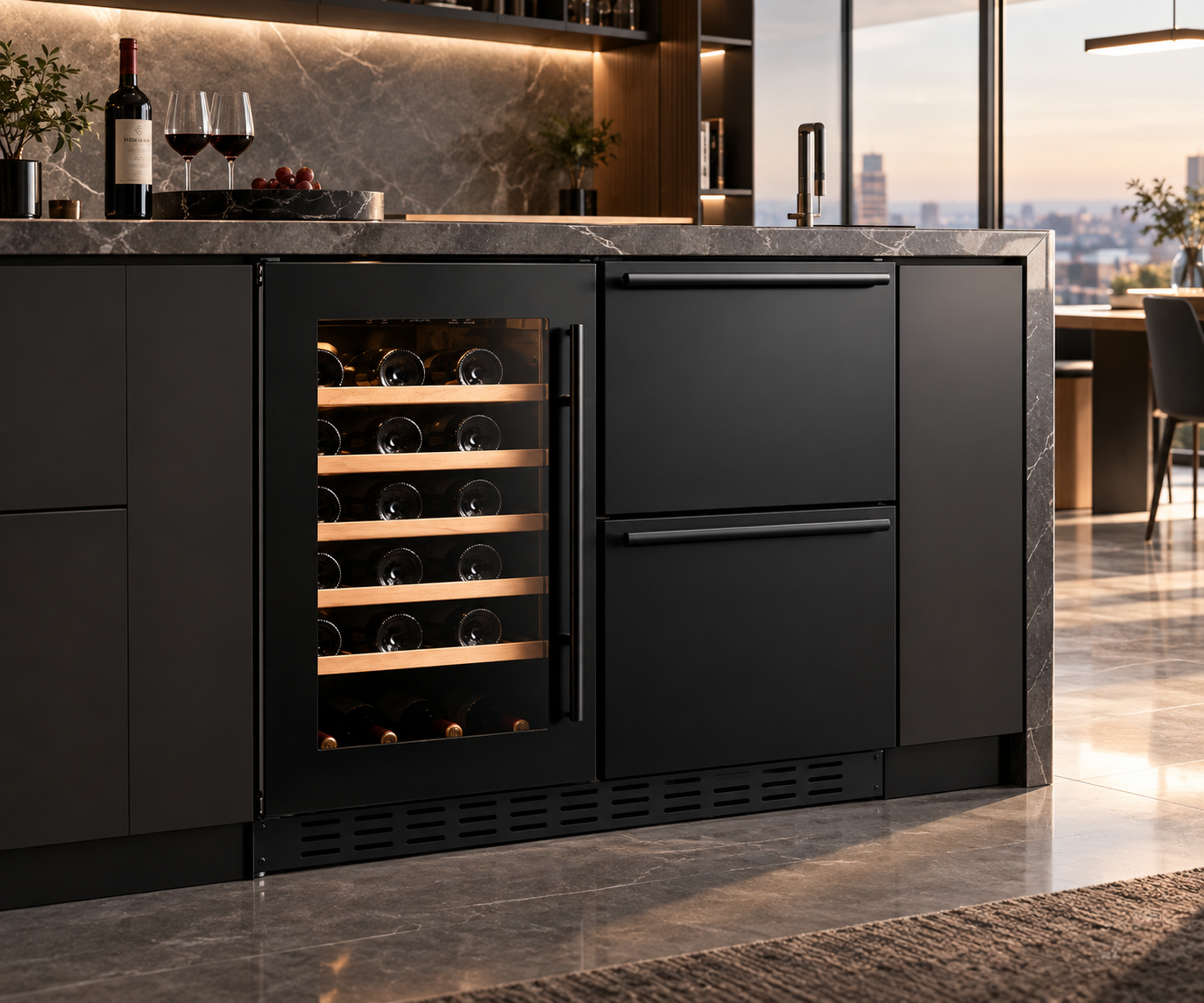
One of the most important directions for the European wine cooler market is the continued development of built-in and under-counter wine storage solutions.
Modern European kitchens increasingly emphasize seamless integration. Consumers and designers want appliances that fit naturally into kitchen cabinetry rather than looking like independent machines.
This creates opportunities for:
- · Built-in wine coolers
- · Under-counter wine coolers
- · 24-inch wine coolers
- · Flush-installation wine coolers
- · Panel-ready wine coolers
- · Slim-depth wine coolers
- · Dual-zone built-in wine coolers
- · Wine and beverage combination coolers
Market research also identifies built-in wine coolers as an important product segment alongside freestanding and countertop models.
For OEM and private-label brands, this means product dimensions, ventilation design, door construction, handle options, installation requirements, and cabinet integration can be just as important as cooling performance.
At WIKI, we see built-in wine refrigeration as one of the key product categories for future development.
2. Wine Coolers Are Becoming Part of Interior Design
The role of a wine cooler is changing.
Instead of simply asking, “How many bottles can it hold?”, premium customers are increasingly considering:
How does it look in my kitchen?
Black glass doors, stainless steel finishes, seamless doors, minimalist handles, push-open designs, wooden shelves, soft LED lighting, and clean cabinet integration can all contribute to the overall appearance of a modern interior.
This trend is particularly relevant for premium wine cooler brands and kitchen appliance companies.
A wine cooler installed beneath a kitchen counter, inside a kitchen island, or beside a home bar needs to coordinate with surrounding furniture and appliances.
For this reason, we believe future wine cooler development will increasingly combine:
Refrigeration Technology + Product Design + Kitchen Integration
rather than focusing only on cooling capacity.
3. Dual-Zone Cooling Remains a Strong Product Direction
Dual-zone wine coolers continue to offer an important advantage for consumers who store different types of wine.
A dual-zone design can provide separate temperature environments for different wine categories, making it attractive for both home collectors and hospitality applications.
For manufacturers, dual-zone products also create opportunities to develop different capacity levels and installation formats, including:
- · Compact dual-zone wine coolers
- · Under-counter dual-zone models
- · Large-capacity dual-zone wine cabinets
- · Built-in dual-zone wine coolers
- · Wine and beverage dual-zone coolers
· The growing variety of sizes and configurations in the European market shows that buyers are looking for solutions that match different spaces and usage scenarios.
4. Energy Efficiency and Sustainable Refrigeration Matter More in Europe
Energy efficiency is becoming an increasingly important consideration in the European appliance market.
For wine cooler manufacturers, energy consumption is closely related to compressor performance, insulation, door construction, temperature control, and overall cabinet design.
European buyers are therefore increasingly interested in technical specifications such as:
- · Annual energy consumption
- · Energy efficiency
- · Refrigerant
- · Compressor performance
- · Temperature stability
- · Noise level
- · Insulation performance
- · Door sealing
- · Standby consumption
For OEM customers, energy performance should be considered during the product-development stage rather than treated as an afterthought.
At WIKI, we believe that future wine cooler development should focus not only on attractive appearance, but also on stable temperature control, efficient cooling, lower operating noise, and optimized energy performance.
5. Smart Wine Coolers Have Potential — But Practical Functions Matter
Smart home technology was one of the major themes at IFA 2026, with connected appliances and AI appearing across many product categories.
The European wine cooler market is also showing interest in connected functions. Industry research identifies Wi-Fi-enabled wine coolers as an emerging opportunity, including functions such as remote temperature control and monitoring.
However, we believe smart features should solve real problems.
For a wine cooler, useful smart functions could include:
- · Remote temperature monitoring
- · Temperature alerts
- · Door-open notifications
- · Power-failure notifications
- · Remote temperature adjustment
- · Wine inventory management
- · Smart home integration
The goal should not simply be to add an app.
The goal should be to make wine storage more convenient, reliable, and intelligent.
European Wine Cooler Market Outlook
The European wine cooler market continues to present attractive opportunities for manufacturers and private-label brands.
According to Mordor Intelligence, the European wine cooler market was estimated at approximately USD 0.94 billion in 2025 and is projected to reach USD 1.22 billion by 2030, representing a CAGR of approximately 5.41% during the forecast period.
The market is supported by several factors, including wine consumption, urbanization, home renovation, hospitality demand, online retail, and the increasing popularity of specialized wine storage.
The market is also not limited to residential applications.
Commercial demand from hotels, restaurants, bars, hospitality businesses, and other wine-serving environments represents another important opportunity.
Key European Opportunities
Based on market developments and our experience at IFA 2026, we see several particularly attractive areas:
Germany and Central Europe
Strong appliance and kitchen markets create opportunities for technically reliable and design-focused wine refrigeration.
France and Southern Europe
Strong wine culture and hospitality activity create natural demand for wine storage products. France is identified as one of the leading European markets for wine coolers.
United Kingdom
Built-in and under-counter wine storage can fit well with premium kitchen and home-bar applications.
Nordic and Western European Markets
Energy efficiency, minimalist design, compact dimensions, and integration with modern interiors can be particularly important.
What This Means for OEM and Private-Label Buyers
The European wine cooler market is becoming more competitive.
For brands, importers, and distributors, simply finding a factory that can produce a standard wine refrigerator is no longer enough.
The more important question is:
Can the manufacturer help us develop a product that fits our market?
This is where OEM/ODM manufacturing becomes increasingly important.
A professional wine cooler manufacturer should be able to support customers with:
- · Existing proven product platforms
- · Logo customization
- · Door design options
- · Handle options
- · Shelf configurations
- · Cabinet finishes
- · Control panel options
- · Packaging customization
- · Different capacities
- · Single-zone and dual-zone configurations
- · Built-in and freestanding designs
- · Product specification adjustments
For private-label brands, this flexibility can make it easier to create a differentiated product range without developing an entirely new refrigeration platform from zero.
WIKI's Direction After IFA 2026
For Foshan Shunde Wiki Electrical Co., Ltd., IFA 2026 reinforced our commitment to wine refrigeration as one of our core manufacturing specialties.
With more than a decade of manufacturing experience, WIKI focuses on developing and producing wine coolers for international markets.
Our product portfolio includes:
- · Built-In Wine Coolers
- · Freestanding Wine Coolers
- · Dual-Zone Wine Coolers
- · Wine & Beverage Coolers
- · Beverage Coolers
- · Drawer Refrigerators
- · Other refrigeration products
However, wine coolers remain a major focus of our product development and international business.
Looking ahead, we will continue to develop products around several key directions:
Built-In Design
Wine coolers designed to integrate naturally into modern kitchens, cabinetry, kitchen islands, and home bars.
Premium Appearance
Black glass, stainless steel, seamless door designs, refined handles, wooden shelves, and minimalist product styling.
Flexible OEM/ODM Solutions
Helping international brands adapt proven products through customized doors, handles, shelves, finishes, logos, packaging, and other product details.
Dual-Zone and Multi-Application Products
Developing wine coolers suitable for different wine storage needs, residential applications, hospitality environments, and commercial spaces.
Efficient and Reliable Cooling
Continuously improving compressor cooling, temperature stability, insulation, energy performance, and operating noise.
From IFA Berlin to Long-Term OEM Partnerships
Participating in IFA 2026 gave us the opportunity to meet international professionals and observe how the global home appliance industry is evolving.
More importantly, it reinforced one important belief:
The future of wine refrigeration is not simply about making a colder cabinet. It is about creating better-integrated, better-designed, more efficient, and more adaptable wine storage solutions.
For European wine cooler brands, importers, distributors, retailers, and private-label companies, this creates new opportunities to build differentiated product lines.
For manufacturers like WIKI, it creates an opportunity to work more closely with international partners — from selecting an existing model to customizing product details and developing a complete wine cooler range.
If you are looking for a wine cooler manufacturer in China for your next OEM/ODM or private-label project, Foshan Shunde Wiki Electrical Co., Ltd. welcomes you to discuss your requirements.
WIKI — Your Professional Wine Cooler Manufacturing Partner in China.
Visit our official website to explore our wine cooler and refrigeration solutions: wikicooler.com.