What to Look for in an Undercounter Refrigerator or Beverage Cooler Manufacturer
- Share
- Issue Time
- Jul 3,2026
Summary
Choosing an undercounter refrigerator or beverage cooler maker? Focus on OEM/ODM, quality control, custom options, compliance, and proven export experience. A must-read for B2B buyers.
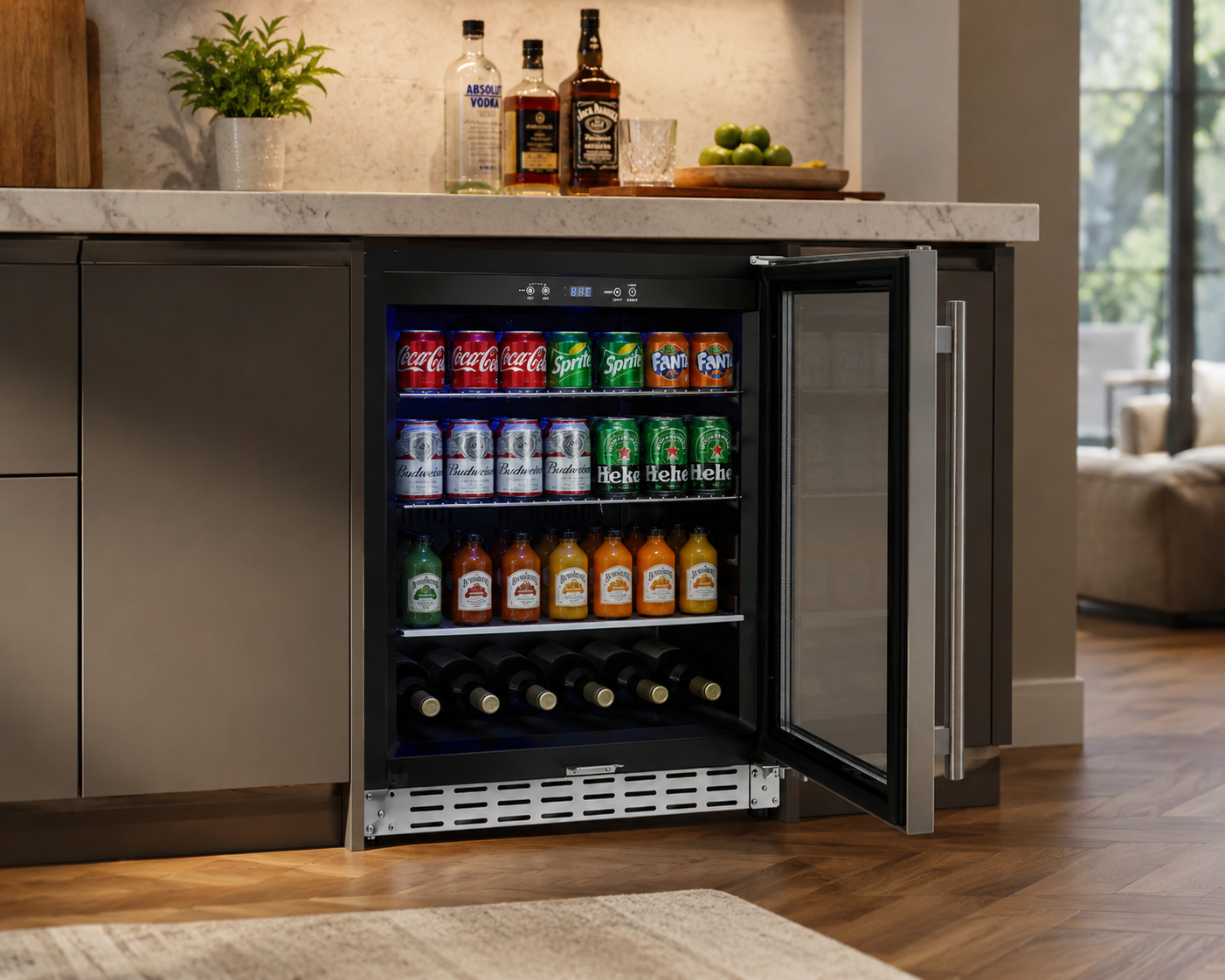
Choosing the right appliance for your home can be a big decision, especially when it comes to something specific like an undercounter refrigerator or beverage cooler. As you search, you'll quickly realize that who makes the product is just as important as the product itself. A manufacturer's reputation is built on the reliability and quality of their products, and this is a key factor in making a worthwhile investment.
My goal is to help you understand what to look for in a really good undercounter refrigerator or beverage cooler manufacturer, so you can make a smart choice for your space. This guide will walk you through the essential considerations, from initial design and material choices to long-term performance and customer support.
I want to make sure you consider all the important things, from how the units are built to the support you get after you buy them. Making an informed decision means looking beyond the sticker price and understanding the value that comes with a well-made product from a reputable company.
Key Takeaways
Here are the essential points to remember when choosing an undercounter refrigerator or beverage cooler manufacturer:
- Assess Your Specific Needs First: Before anything else, determine whether you need a freestanding or built-in unit, as this impacts ventilation, cost, and installation. Also, differentiate between a wine cooler and a general beverage center, as their temperature ranges and internal storage features are designed for different purposes.
- Prioritize Quality and Performance: A top-tier manufacturer uses high-grade materials like 304 stainless steel and Low-E, argon-filled glass doors. Look for performance features like dynamic cooling technology for stable temperatures, quiet operation, and energy-efficient designs, often indicated by an ENERGY STAR certification.
- Don't Overlook Longevity and Support: The best manufacturers stand behind their products with rigorous testing and comprehensive warranties that cover the sealed system. Responsive customer service and professional support are crucial for a long and hassle-free ownership experience.
- Consider Customization and Manufacturing Prowess: If you have specific design needs, look for a manufacturer with strong OEM/ODM capabilities. Companies like WIKICOOLER exemplify this by offering flexible design, sizing, and feature personalization. Ensure they hold relevant certifications (like UL, ETL) and have transparent quality control processes.
Understanding Your Needs Before Choosing an Undercounter Refrigerator or Beverage Cooler Manufacturer
Before diving into the specifics of manufacturers, it’s crucial to first define what you need from an undercounter appliance. Your specific requirements for installation, usage, and capacity will significantly narrow down the field and help you identify the manufacturers that specialize in the right type of product for your home.
Freestanding vs. Built-In Units
One of the most fundamental decisions is whether you need a freestanding or a built-in unit. This choice affects not only the installation process but also the design and engineering of the appliance itself.
Cost Differences and Compressor Placement
Freestanding units are standalone appliances that can be placed anywhere with an electrical outlet. They typically vent heat from the back or sides, requiring several inches of clearance for proper airflow. Because of this, they are generally not suitable for installation flush within cabinetry. On the other hand, built-in units are specifically designed to be installed under a counter and sit flush with your cabinetry for a seamless, integrated look.
Key differences include:
- Ventilation: This is the most critical distinction. Built-in models are always front-venting, meaning the compressor breathes through a grille on the front of the unit at the bottom. This design allows them to be enclosed by cabinets on the top, back, and sides without overheating. Freestanding models usually vent from the back, requiring open space around them to dissipate heat.
- Cost: Freestanding coolers are generally more affordable due to simpler manufacturing and the absence of specialized front-venting systems. Built-in units come at a premium, with prices often starting significantly higher than their freestanding counterparts because of the engineering required for integrated ventilation and their high-end aesthetics.
- Installation: Freestanding units offer plug-and-play convenience with minimal installation costs. Built-in models require precise cabinet cutouts and professional installation to ensure a proper fit and function, which adds to the overall expense.
- Aesthetics: Built-in models provide a sleek, custom look that can enhance your home's resale value. Freestanding units offer more flexibility in placement but do not integrate as seamlessly into a kitchen or bar design.
Compressor Placement: The compressor is the heart of the refrigeration system, pumping refrigerant to cool the interior. In undercounter units, it is almost always located at the bottom to maximize the usable storage space above. For built-in models, this bottom placement is combined with front-facing vents. The location is also crucial for serviceability; a bottom-mounted compressor is generally easier for technicians to access for maintenance or repair.
Cabinet Construction Materials and Standard Dimensions
The quality of a manufacturer can often be judged by the materials they use. For undercounter refrigerators and beverage coolers, the cabinet construction is key to both durability and performance.
- Exterior Materials: Stainless steel and aluminum are common choices for the exterior. High-quality manufacturers often use 304-grade stainless steel for its superior durability and corrosion resistance, especially in humid or outdoor environments. Less expensive options might include aluminum or lower-grade stainless steel. Some units also come "panel-ready," meaning they are designed to have a custom cabinet panel installed on the front to match your existing kitchen cabinetry perfectly.
- Interior Materials: The interior can be made of stainless steel, aluminum, or ABS plastic. A stainless steel interior is easiest to clean and provides a premium look, while ABS plastic is a more economical but still durable option.
- Standard Dimensions: To ensure a proper fit, manufacturers adhere to standard dimensions.
- Width: The most common widths are 15 inches and 24 inches. A 24-inch model is a popular choice for ample storage, while a 15-inch model is ideal for smaller spaces or narrow bar setups.
- Height: Standard counter height is typically 36 inches, so undercounter units are usually designed to be between 34 and 35 inches tall to fit comfortably underneath. Models designed for ADA (Americans with Disabilities Act) compliance will be shorter, typically around 32 inches high, to fit under lower countertops.
- Depth: Most units are between 23 and 27 inches deep, allowing them to sit flush with standard 24-inch deep cabinetry.
When evaluating a manufacturer, look for one that offers a variety of sizes and finishes, such as WIKICOOLER, which demonstrates an ability to cater to diverse installation needs.
Wine Coolers vs. General Beverage Centers
While they may look similar, wine coolers and beverage centers are designed for very different purposes. A reputable manufacturer will engineer these products with distinct features tailored to their intended contents.
Specific Temperature Requirements for Different Beverages
The primary difference between a wine cooler and a beverage center lies in their temperature capabilities.
- Beverage Centers: These are designed to serve drinks ice-cold. Their typical temperature range is approximately 34°F to 50°F (1°C to 10°C). This is ideal for sodas, beers, water, and juices that are best enjoyed chilled for maximum refreshment.
- Wine Coolers: Wine is far more delicate. Storing it too cold can stunt its aging process and dull its flavors, while storing it too warm can cause it to age prematurely. The ideal storage temperature for all types of wine is around 55°F (13°C). Serving temperatures vary:
- White Wines & Rosés: 45°F - 50°F (7°C - 10°C)
- Red Wines: 55°F - 65°F (13°C - 18°C)
Because of these specific needs, high-quality manufacturers offer dual-zone wine coolers. These models feature two independently controlled compartments, allowing you to store red and white wines simultaneously at their respective ideal temperatures. A "combo" or dual-zone wine and beverage center might offer an even wider temperature range, with one zone for ice-cold drinks and another for wine.
| Appliance Type | Typical Temperature Range | Best For |
|---|---|---|
| Beverage Center | 34°F - 50°F (1°C - 10°C) | Soda, Beer, Water, Juice |
| Single-Zone Wine Cooler | 45°F - 65°F (7°C - 18°C) | Storing one type of wine or long-term aging at 55°F |
| Dual-Zone Wine Cooler | Zone 1: 42°F-54°F, Zone 2: 54°F-64°F | Storing multiple wine types (e.g., whites and reds) |
| Combination Unit | Wide and/or dual-zone | Storing both wine and other assorted beverages |
Storage Capacity and Specialized Internal Features
The internal layout is another area where dedicated wine coolers and beverage centers differ significantly.
- Beverage Centers: Versatility is the goal. They typically feature flat, adjustable shelves, often made of glass or wire. This design allows you to store a variety of items of different shapes and sizes, from standard 12 oz. cans to tall bottles and cartons. The capacity is usually measured in the number of cans it can hold (e.g., "140-can capacity").
- Wine Coolers: These appliances are all about protecting the wine. They feature scalloped or grooved shelves, often made of wood, designed to cradle wine bottles horizontally. This traditional storage method keeps the cork moist, preventing it from drying out and allowing air to spoil the wine. The racking is specifically sized for standard Bordeaux-style bottles, although flexible designs may accommodate larger Champagne or Burgundy bottles. The capacity is measured in the number of bottles.
A manufacturer that offers distinct, purpose-built shelving for each type of appliance demonstrates a deeper understanding of the consumer's needs. A wine cooler with flat glass shelves, for instance, would be a red flag, as it shows a disregard for proper wine storage principles.
Key Quality Indicators from a Reputable Undercounter Refrigerator or Beverage Cooler Manufacturer
When you invest in a premium appliance, you expect it to be built to last and perform flawlessly. A reputable manufacturer distinguishes itself through superior construction, innovative technology, and a commitment to quality that is evident in every detail of the product.
Construction and Materials
The materials used in an undercounter refrigerator or beverage cooler are a direct reflection of its quality and expected lifespan. Discerning manufacturers do not cut corners in this area.
Durable Stainless Steel Interiors and Exteriors
The choice of stainless steel is a key differentiator between high-end and budget appliances. Not all stainless steel is the same, and a top-tier manufacturer will specify the grade they use.
- 304 vs. 430 Stainless Steel: Grade 304 stainless steel, also known as "18-8" stainless steel, contains 18% chromium and 8% nickel. The nickel content provides superior resistance to corrosion and rust, making it the gold standard for kitchen appliances, particularly those exposed to moisture and acidic substances. Grade 430 stainless steel contains less chromium and no nickel, which makes it less expensive but more susceptible to corrosion over time. A quality manufacturer will proudly advertise their use of 304 stainless steel.
- Stainless Steel Interiors: While plastic interiors are common and cost-effective, a stainless steel interior offers several advantages that premium manufacturers embrace. Stainless steel interiors are more durable, resist odors and stains, and are non-porous, which can help limit bacteria growth. Furthermore, the reflective surface of stainless steel can improve interior lighting and, most importantly, it helps to stabilize the internal temperature by retaining cold more effectively when the door is opened.
- Finish and Durability: Beyond the grade of steel, look for features like a fingerprint-resistant finish, which is common on high-end appliances to keep them looking clean. The overall build quality, including solid hinges and a sturdy feel, indicates a product designed for longevity.
Advanced Glass Doors for Protection and Efficiency
For models with a glass door, the quality of the glass is paramount not only for showcasing the contents but also for protection and energy efficiency.
- UV Protection: This is especially critical for wine coolers. Ultraviolet (UV) rays from sunlight or even fluorescent lighting can penetrate standard glass and damage the complex organic compounds in wine, leading to a "light-struck" taste and premature aging. Reputable manufacturers use dual- or triple-pane glass doors with a special Low-E (low-emissivity) coating or a dark tint that blocks up to 99% of harmful UV rays.
- Insulation and Energy Efficiency: A glass door is a potential point of heat transfer. To combat this, premium manufacturers use double or even triple-pane glass. The space between the panes is often filled with an inert gas, typically argon, which is denser than air and provides superior insulation. This, combined with a Low-E coating that reflects heat, significantly boosts the unit's energy efficiency. It keeps the cold air in and the warm air out, reducing the workload on the compressor and lowering energy consumption.
A manufacturer that invests in these advanced glass technologies is signaling a commitment to both product performance and energy responsibility.
| Glass Feature | Primary Benefit | Importance |
|---|---|---|
| UV-Resistant Coating/Tint | Protects contents (especially wine) from light damage. | Critical for wine coolers, highly recommended for all glass doors. |
| Dual/Triple-Pane Glass | Provides a thermal barrier, improving insulation. | Essential for energy efficiency and temperature stability. |
| Argon Gas-Filled | Enhances insulation properties beyond what air can provide. | High for maximizing energy efficiency and performance. |
| Low-Emissivity (Low-E) Coating | Reflects heat to keep the interior cool and reduces UV penetration. | High for energy savings and content protection. |
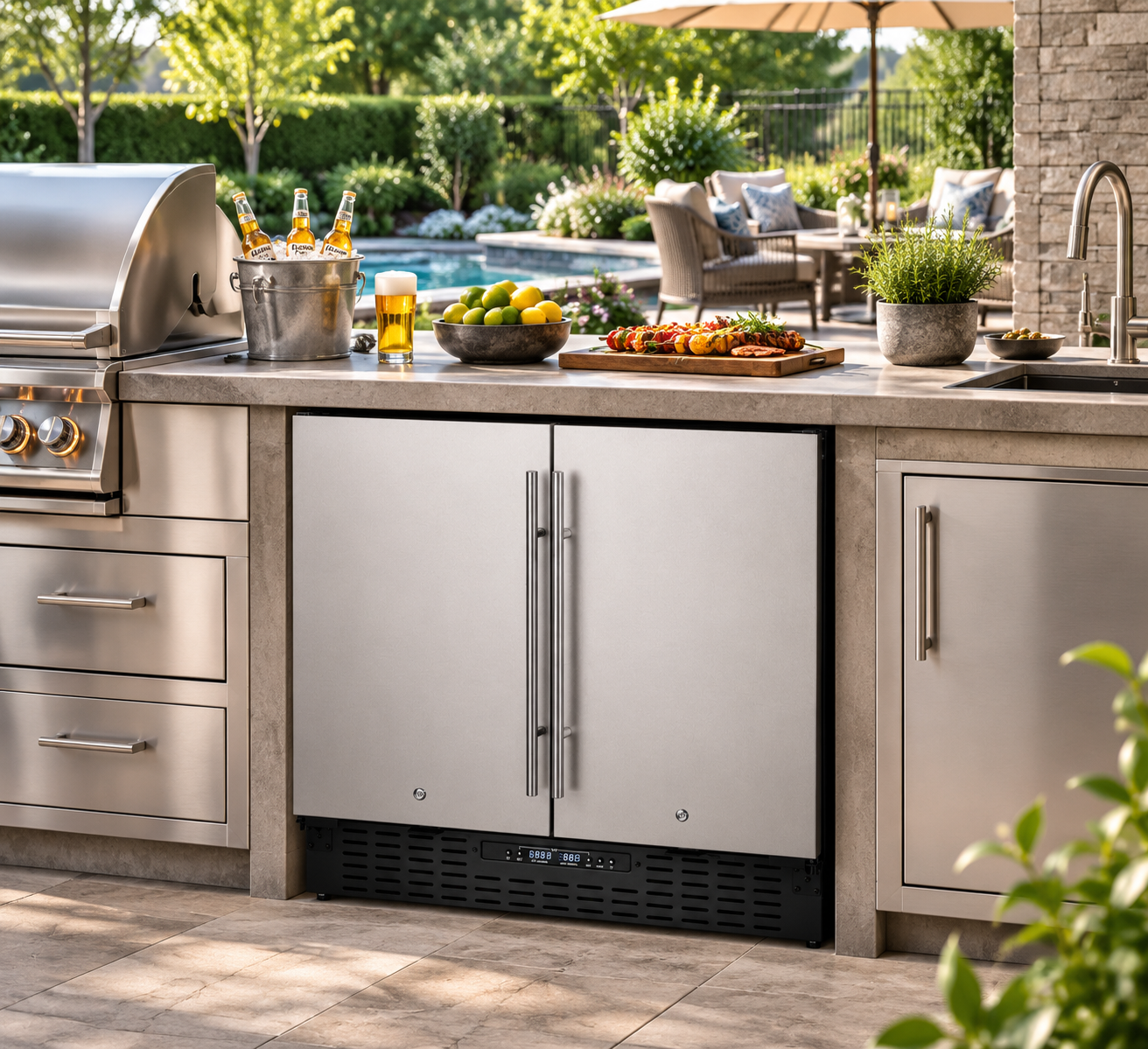
Performance and Innovation
Beyond materials, the best manufacturers push the envelope with technology that enhances performance, convenience, and sustainability. These innovations are what separate a simple cold box from a sophisticated preservation appliance.
Precise Temperature Management and Quick Cooling Functions
The core function of any refrigerator is to cool, but how it achieves and maintains that temperature varies significantly.
- Dynamic Cooling Technology: Superior manufacturers utilize dynamic cooling or forced-air cooling. This technology uses fans to actively circulate cold air throughout the entire cabinet. The result is a much more even temperature distribution from top to bottom, eliminating the hot and cold spots common in cheaper, static-cooled units. This is critical for preserving beverages and especially wine, as temperature fluctuations can be damaging. It also allows the unit to recover its set temperature much faster after the door has been opened.
- Quick Cooling Functions: Some high-end models offer a "quick chill" or "rapid cool" feature. This function temporarily runs the compressor at maximum power to quickly lower the temperature of newly added, room-temperature items. This is perfect for when you've just stocked the cooler before a party and need drinks cold in a hurry. Some advanced external chillers claim they can cool a can in just 60 seconds.
Look for manufacturers who highlight their cooling systems and can explain why their technology provides a more stable and responsive environment.
Flexible Storage Configurations and Customizable Options
A good manufacturer understands that one size does not fit all. They offer flexibility in both storage and aesthetics to meet the unique needs of different users.
- Adjustable Shelving and Bins: The ability to reconfigure the interior is a hallmark of a well-designed unit. Look for systems with adjustable shelves that can be moved to accommodate different bottle heights and can sizes. Some models offer a mix of full-depth shelves and half-depth shelves to allow for standing bottles in front. Full-extension, slide-out shelving is another premium feature that allows for easy access to items at the back without having to move everything in front.
- Customizable "Panel-Ready" Options: For those seeking a truly integrated look, top manufacturers offer panel-ready models. These units are designed to accept a custom cabinet panel and handle, allowing the appliance to blend seamlessly and disappear into the surrounding cabinetry. A manufacturer that offers panel-ready options, like WIKICOOLER, demonstrates a commitment to high-end design and custom integration.
Energy Consumption and Eco-Friendly Designs
In today's world, energy efficiency is a major consideration. A forward-thinking manufacturer prioritizes sustainability in their designs.
- ENERGY STAR® Certification: Look for the ENERGY STAR label. This is a government-backed symbol for energy efficiency, indicating that the product meets strict energy performance standards set by the U.S. A manufacturer whose products are ENERGY STAR certified is committed to reducing greenhouse gas emissions and helping you save on your utility bills.
- Eco-Friendly Refrigerants: The type of refrigerant used is another key indicator. Older refrigerants like CFCs and HCFCs have been phased out due to their harmful effects on the ozone layer. Modern, eco-friendly appliances often use R600a (isobutane), a natural hydrocarbon refrigerant. R600a has zero ozone depletion potential (ODP) and a very low global warming potential (GWP), making it a much more environmentally responsible choice. It is also highly efficient, which contributes to lower energy consumption and quieter operation.
The Importance of Longevity and Support from an Undercounter Refrigerator or Beverage Cooler Manufacturer
An undercounter cooler is a significant investment, and its value is measured not just by its initial performance but by its durability and the support you receive over its lifetime. A reputable manufacturer understands this and builds their brand on reliability and customer trust.
Rigorous Testing and Durability Standards
The confidence a manufacturer has in its product is often reflected in the strenuous testing it undergoes before it ever reaches your home.
Thorough Product Testing and Expected Lifespan
Leading manufacturers don't just assemble parts; they engineer systems designed for reliability. This involves extensive testing that simulates years of real-world use.
- Product Testing Standards: Credible manufacturers adhere to internationally recognized safety and performance standards, such as those from IEC, UL, or ASTM. This third-party testing verifies that a product is safe from electrical, mechanical, and thermal hazards. Internally, these companies often conduct their own rigorous durability tests, such as opening and closing doors tens of thousands of times, to identify potential failure points before a product goes to market.
- Expected Lifespan: The average lifespan of a well-maintained undercounter refrigerator or beverage cooler is typically between 10 to 15 years. High-quality brands often design their products to meet or exceed this range. While many factors can influence longevity, a unit built with superior components and robust construction by a manufacturer with a reputation for durability is more likely to provide a longer service life, ultimately offering a better return on investment.
Comprehensive Warranty and After-Sales Service
A warranty is more than just a piece of paper; it's a manufacturer's promise to stand behind their product. The quality of a warranty and the responsiveness of customer service are clear indicators of a company's commitment to its customers.
Full Coverage and Sealed System Guarantees
Not all warranties are created equal. It's crucial to read the fine print to understand what is covered and for how long.
- Standard vs. Premium Warranties: Most appliances come with a basic one-year parts and labor warranty. However, top-tier manufacturers often provide more extensive coverage. This can include two or more years of full coverage, demonstrating a higher confidence in their product's reliability.
- Sealed System Warranty: The most critical—and expensive—part of a refrigeration unit is the sealed system. This includes the compressor, condenser, evaporator, and the tubing that contains the refrigerant. A failure in the sealed system is a major repair. Because of this, the best manufacturers offer a separate, much longer warranty on these components—often 5 to 10 years for parts and labor. A warranty that only covers parts for the sealed system after the first year is less valuable, as labor can be a significant portion of the repair cost. A strong sealed system warranty is one of the most important things to look for.
| Warranty Type | What It Covers | Standard Duration | Premium Duration |
|---|---|---|---|
| Full Warranty | All parts and labor for any manufacturing defect. | 1 Year | 2-3+ Years |
| Sealed System | Compressor, condenser, evaporator, and tubing. | 5+ years (parts only) | 5-10+ years (parts and labor) |
Responsive Customer Support and Professional Installation Benefits
The best product can be undermined by poor customer service. A reputable manufacturer invests in a support system that ensures a positive ownership experience from day one.
- Customer Support: When issues arise, you want a manufacturer with a responsive and knowledgeable customer support team. Look for brands with positive reviews regarding their service. Can you easily contact them? Are their representatives helpful? J.D. Power's appliance studies, for example, measure customer satisfaction with service experiences, which can be a valuable resource.
- Professional Installation: Many high-end manufacturers require or strongly recommend professional installation. This is not just an upsell; it's crucial for performance and safety. Professional installers ensure the unit is properly leveled (which is vital for compressor function), that electrical and water line connections are secure, and that built-in units have adequate ventilation. An improper installation can lead to reduced efficiency, premature wear, and may even void the manufacturer's warranty. Investing in professional installation protects your appliance and ensures it operates as the manufacturer intended.
Exploring Customization and Manufacturing Capabilities of an Undercounter Refrigerator or Beverage Cooler Manufacturer
For many homeowners, designers, and businesses, the ability to customize an appliance to fit a specific aesthetic or functional need is paramount. This is where a manufacturer's design flexibility and production expertise truly shine. A company that offers robust customization solutions, such as WIKICOOLER, is often a sign of a mature and capable operation.
OEM/ODM Solutions and Design Flexibility
OEM (Original Equipment Manufacturer) and ODM (Original Design Manufacturer) are two models of manufacturing that offer different levels of customization. A manufacturer adept in both can cater to a wide spectrum of client needs.
Custom Design and Integration with Modern Aesthetics
- OEM (Original Equipment Manufacturer): In an OEM model, a company (the brand) provides its own detailed product design and specifications to a manufacturer, who then produces the item. This allows for full creative control over the product. If you have a unique design for a beverage cooler, a manufacturer with OEM capabilities can bring your vision to life.
- ODM (Original Design Manufacturer): In an ODM model, the manufacturer already has a pre-designed product that a brand can then relabel and sell as its own. This is a faster, more cost-effective way to bring a product to market. A manufacturer offering ODM solutions provides a "white-label" product that can often still be customized in terms of color, finish, and branding.
A manufacturer versatile in both OEM and ODM can support clients ranging from startups wanting a quick market entry to established brands seeking a completely unique product. This flexibility is a strong indicator of their engineering and production depth.
- Aesthetic Integration: Top manufacturers are attuned to modern design trends. They offer options like panel-ready doors that accept custom cabinetry for a seamless look, multiple handle styles (e.g., pro-style, tubular), and various finishes like matte black, matte white, or classic stainless steel to match any decor.
Diverse Sizing and Feature Personalization
Customization extends beyond aesthetics to the very form and function of the unit.
- Custom Sizing: While standard 15-inch and 24-inch widths are common, some projects may require unique dimensions. A capable manufacturer can often produce custom-sized units to fit non-standard spaces, although this typically involves higher costs and minimum order quantities (MOQ).
- Feature Personalization: Through an OEM partnership, nearly any feature can be personalized. This could include adding specific types of shelving, integrating a unique digital control interface, incorporating a specific brand of compressor for performance reasons, or adding custom LED lighting colors.
Supplier Vetting and Quality Assurance
Partnering with a manufacturer, especially for a custom or large-scale order, requires a thorough vetting process. A transparent and well-certified manufacturer inspires confidence and ensures a quality outcome.
Manufacturer Certifications and Quality Control Processes
Certifications from recognized third-party organizations are objective proof that a manufacturer adheres to specific safety and quality standards.
- Key Certifications:
- UL (Underwriters Laboratories) and ETL (Intertek): These are two of the most recognized Nationally Recognized Testing Laboratories (NRTLs). A UL or ETL mark on an appliance signifies that it has been tested and certified to meet North American safety standards for fire and electrical hazards. There is no significant difference in the validity of the UL and ETL marks; both are accepted by inspectors and authorities.
- CE Marking: This is a mandatory compliance mark for products sold in the European Economic Area (EEA), indicating conformity with health, safety, and environmental protection standards.
- ISO 9001: This is a global standard for a Quality Management System (QMS). A manufacturer with ISO 9001 certification has demonstrated that its processes for design, production, and service are well-documented and consistently followed to ensure quality.
- Quality Control (QC) Process: Ask about their QC process. A robust QC strategy involves multiple checkpoints, including pre-production inspection of raw materials, in-process inspections during assembly, and final functional and cosmetic testing before the product is packaged. A good manufacturer will have detailed checklists and will be able to trace any defects back to their source.
Production Volume Requirements and Delivery Timelines
Practical considerations like production capacity and scheduling are crucial for any business or large-scale residential project.
- Minimum Order Quantity (MOQ): This is the smallest number of units a manufacturer is willing to produce in a single order, especially for custom designs. The MOQ is set to ensure the production run is profitable enough to cover setup, tooling, and material costs. MOQs can range from a few units to thousands, depending on the complexity and customization of the product.
- Lead Time: This is the total time from placing an order to receiving the finished product. Lead times for custom appliances can be lengthy, often ranging from 6 to 12 weeks or more. This accounts for engineering, sourcing components, production scheduling, assembly, and shipping. A reliable manufacturer will provide a clear and realistic timeline and communicate proactively about any potential delays.
Frequently Asked Questions (FAQ)
1. What is the most important factor when choosing an undercounter refrigerator manufacturer?
While there are many important factors, the most critical is arguably the manufacturer's commitment to quality and reliability. This is demonstrated through their use of high-grade materials (like 304 stainless steel and Low-E, UV-protected glass), advanced performance technologies (like dynamic cooling), and comprehensive warranties, especially on the sealed system. A product from a reliable manufacturer is more likely to perform well, last longer, and be supported by good customer service, providing better long-term value than a cheaper, less reliable alternative.
2. How much should I expect to spend on a good undercounter beverage cooler?
Prices vary widely based on type, size, and features. Freestanding models are generally more affordable, often ranging from $300 to $800. High-quality, built-in undercounter models command a premium price, typically starting around $1,000 and can exceed $4,000 for luxury brands with advanced features like dual zones, panel-ready designs, and whisper-quiet operation. While the upfront cost is higher, the investment often pays for itself in better performance, energy efficiency, and a longer lifespan.
3. Is a dual-zone cooler worth the extra cost?
It depends entirely on your needs. If you are a wine enthusiast who enjoys both red and white wines, a dual-zone cooler is absolutely worth it. It allows you to store each type of wine at its ideal serving or storage temperature in two separate, independently controlled compartments. However, if you primarily plan to store sodas, beer, and water, a single-zone beverage center that maintains a consistently cold temperature is more than sufficient and will be more cost-effective.
4. Why is professional installation for a built-in unit so important?
Professional installation is crucial for several reasons. First, built-in units require precise cabinet cutouts for a seamless fit. Second, they have front-venting systems that need to be unobstructed to function correctly; improper installation can block airflow and cause the compressor to overheat. Third, it ensures that all electrical and water line connections (for models with ice makers) are safe and secure to prevent hazards like leaks or electrical faults. Finally, many manufacturers' warranties can be voided by improper, non-professional installation.
5. What does "panel-ready" mean, and do I need it?
"Panel-ready" means the appliance door is designed to accept a custom-made cabinet panel that matches your existing kitchen or bar cabinetry. This allows the refrigerator or beverage cooler to blend in completely, creating a seamless and high-end integrated look. You would work with your cabinet maker to create a panel that fits the manufacturer's specifications. If you want your appliance to be a hidden, integrated part of your kitchen design, a panel-ready model is the ideal choice. If you prefer the look of stainless steel or another finish, you do not need a panel-ready model.
6. How can I verify a manufacturer's claims about quality?
Start by looking for tangible proof. Check their website and product specifications for details like the grade of stainless steel (look for 304), the type of glass used (Low-E, argon-filled, UV-protected), and certifications (ENERGY STAR, UL, ETL). Read independent third-party reviews and customer testimonials on retail sites and forums. Pay close attention to the warranty details—a long and comprehensive warranty, especially on the sealed system, is a strong sign of a manufacturer's confidence in their product. A reputable manufacturer like WIKICOOLER will be transparent about their materials and processes.
Conclusion
Choosing the right undercounter refrigerator or beverage cooler manufacturer involves careful consideration of your specific needs, the manufacturer's commitment to quality, their support services, and their ability to innovate. It's a decision that goes beyond simple aesthetics or initial price. True value lies in the intersection of durable materials, intelligent design, and reliable long-term performance.
By focusing on these key areas—from understanding whether you need a front-venting built-in unit or a flexible freestanding one, to scrutinizing the grade of stainless steel and the efficiency of the glass door—I believe you can make an informed decision that leads to a long-lasting and satisfying investment for your home. Look for manufacturers who are transparent about their processes and stand firmly behind their products with strong warranties and responsive support.
Don't hesitate to ask questions and verify claims to ensure you're getting the best product and support from your chosen undercounter refrigerator or beverage cooler manufacturer. By doing your homework, you can select an appliance that not only meets your needs today but continues to bring you convenience and enjoyment for years to come.